Developmental assessment
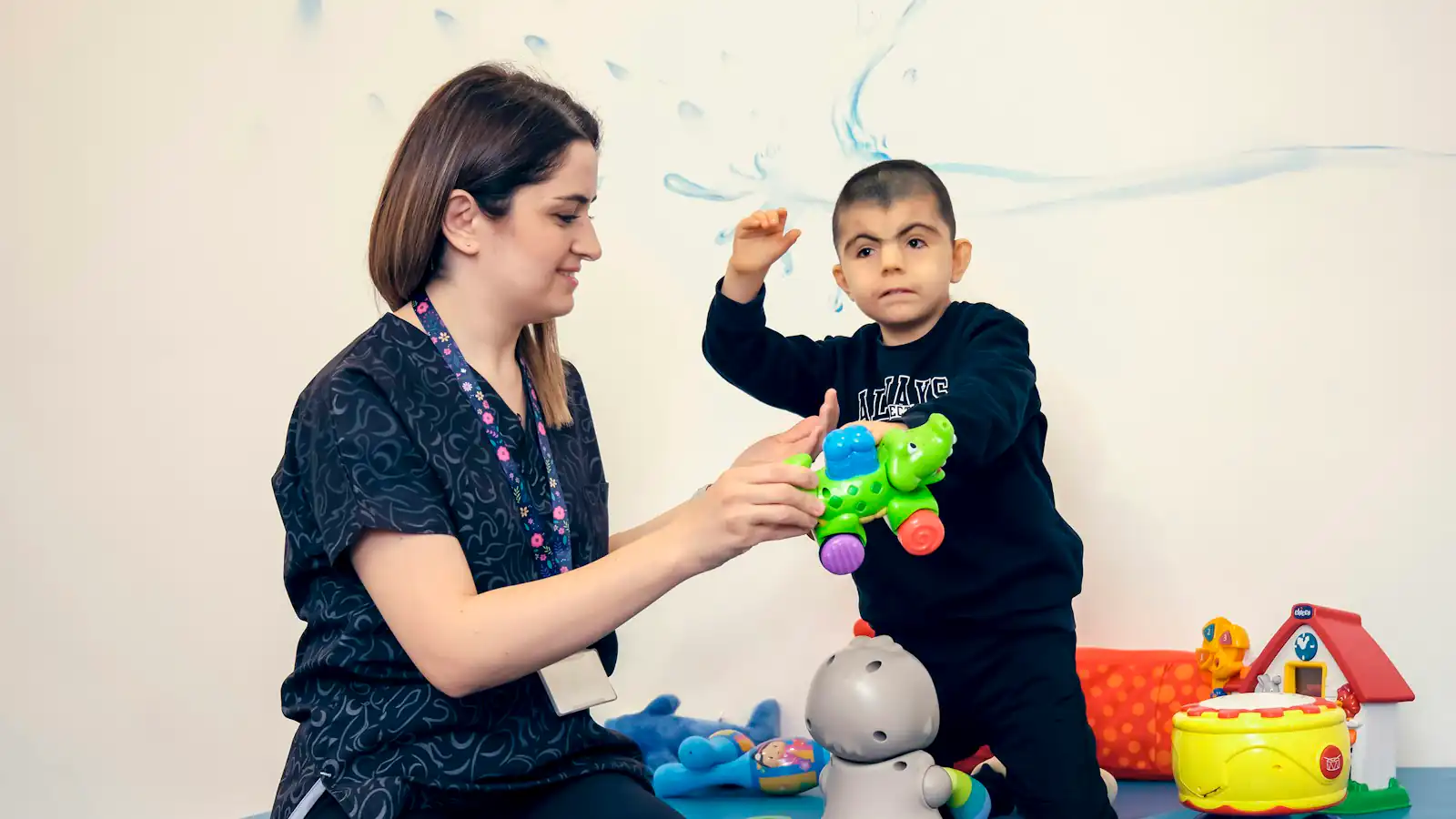
Standardised tests and clinical observation of fine and gross motor skills, visual perception, sensory processing and self-care.

Private occupational therapy for children and young people who find everyday tasks harder than they should be, from handwriting and dressing to coordination, play and coping with the school day.
Request a quote
Tell us a little about what you need and we will be in touch to discuss the next steps.
We provide private assessment, therapy and written reports for children and young people in Newcastle and across the North East, building the skills and confidence they need at home, at school and at play.
An occupational therapist works with your child at home, at school or nursery, or by video where that suits. The work starts with an initial conversation, moves on to a hands-on assessment and a written report with recommendations, and continues with play-based therapy sessions if they are needed.
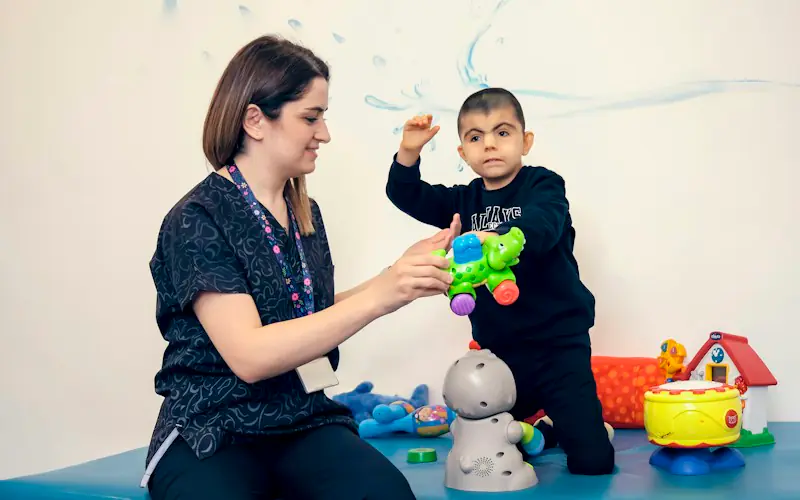
Children's OT suits babies, children and teenagers whose difficulties are affecting daily routines, learning or wellbeing.
When a child finds playing, eating, dressing or learning unusually hard, the effects spread quickly: mornings become a battle, homework ends in tears and confidence at school starts to slip. Some families arrive with a diagnosis such as dyspraxia (DCD), autism or ADHD. Many simply have a sense that something is not quite right and want a clear explanation. Teachers and SENCOs often raise the first concern, particularly around handwriting, sitting still or managing the classroom. Our guide to the signs your child may benefit from OT covers this in more depth.
Every child's programme is different, but most draw on the elements below.
Standardised tests and clinical observation of fine and gross motor skills, visual perception, sensory processing and self-care.
Findings explained in plain English, with goals and recommendations you can share with school or health professionals.
One-to-one sessions that build skills through purposeful, motivating activities matched to your child's interests.
Classroom observation, conversations with teachers and strategies staff can use during lessons.
Short, realistic activities and coaching for parents so progress continues between sessions.
Recommendations for seating, pencil grips, sloped boards or adapted cutlery where they help.
Goals are agreed with you and, where possible, with your child, so they feel meaningful rather than imposed. They are written in everyday terms, such as getting dressed for school without help or writing a short paragraph without hand pain, which makes progress easy to recognise.
Dressing, eating with cutlery, brushing teeth and toileting are common priorities. Breaking each task into steps and practising them in a calm, predictable way often reduces stress for the whole family.
Therapy can work on grip, posture, letter formation and speed, alongside scissor skills and organising equipment. Where writing remains effortful, the report may recommend alternatives such as typing.
Ball skills, balance and body awareness help with PE and playground games. For children who become overwhelmed easily, therapy also explores calming strategies, which may lead into our sensory integration therapy service.
Share your child's age, school and the difficulties you have noticed, plus any reports you already have.
A short discussion clarifies priorities and whether a home visit, school visit or both makes sense.
Your child does not need to prepare. Activities feel like play, and goals in the report are agreed with you.
Sessions are planned in blocks, and goals are revisited at each review before anything further is booked.
Seeing a child where the difficulty actually shows up, whether that is the breakfast table or the classroom, gives a truer picture than a clinic room. We visit families in Newcastle, Gateshead, North and South Tyneside, Sunderland, Northumberland and County Durham, and video sessions work well for parent coaching and reviews.
Paediatric reports are written for parents first and professionals second. Schools use them to plan classroom support, and they can contribute evidence to SEN support plans. If you need a report written specifically for an Education, Health and Care Plan, the EHCP and school assessments service is designed for that purpose.
Many families self-fund children's OT, and some private health insurance policies contribute. You will receive a quote before any work goes ahead, and the fees and funding page explains the options in more detail.
No. You can refer your child directly. An assessment can help clarify what is going on, and the report can be shared with your GP or paediatrician if further investigation seems sensible.
That depends on your child's needs and goals. After the assessment you will receive a recommendation for a block of sessions, with progress reviewed before any further therapy is planned.
Yes, with your consent. Talking to the class teacher or SENCO helps make recommendations realistic, and a school observation can be included in the assessment.
Sessions look like purposeful play. Your child might complete an obstacle course, build with small pieces or practise a dressing task, with each activity chosen to work towards an agreed goal.
Send a few details about your child and the difficulties you are seeing, and Private Occupational Therapy will suggest a sensible first step and provide a quote.