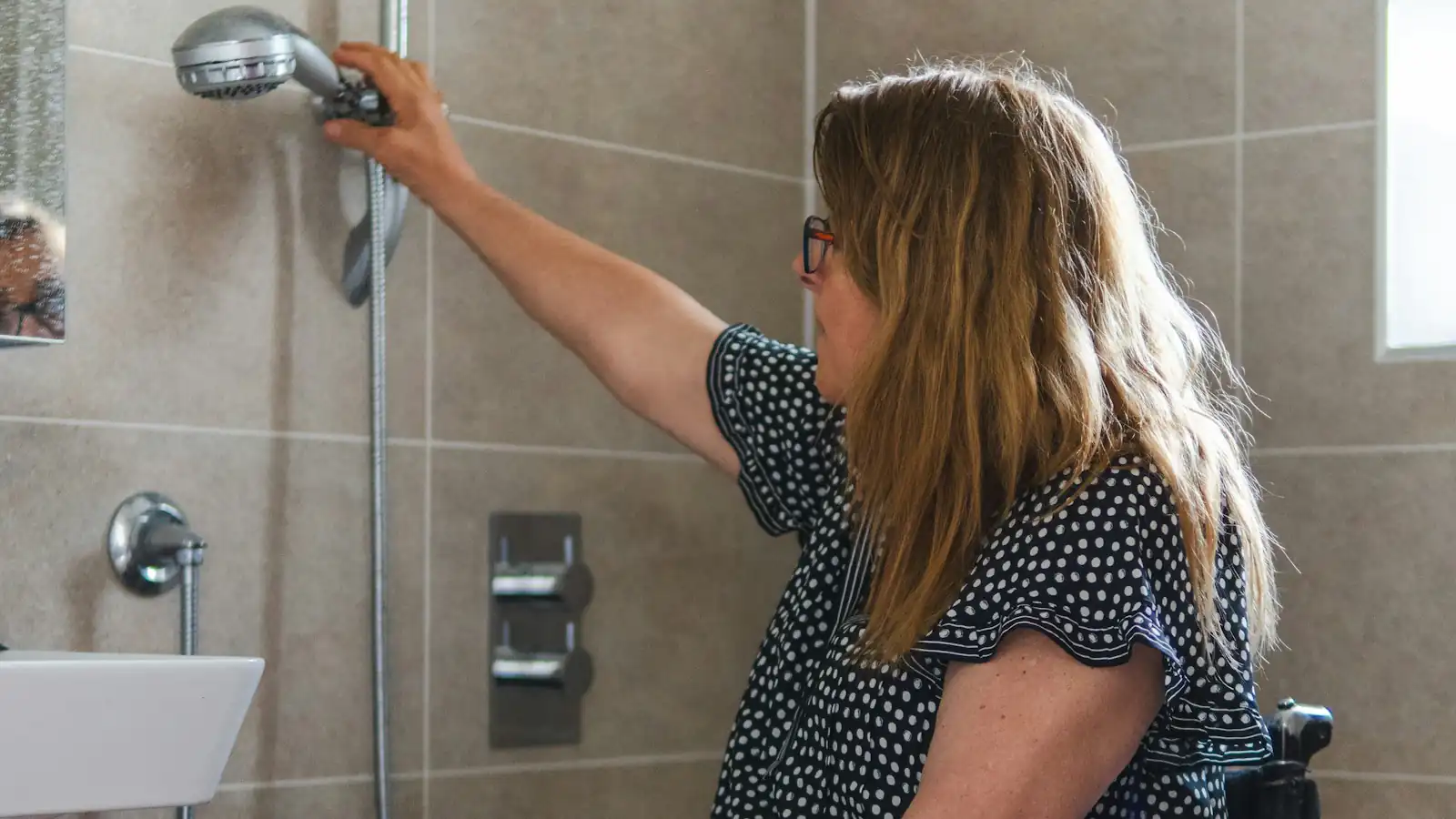
Level-access showers
Replacing a bath with a level-access shower or wet room, with seat and rail positions specified.

A home visit from an occupational therapist to work out what would make your home safer and easier to live in, from grab rails to level-access showers, with a written report you can share with builders, councils and funders.
Request a quote
Tell us a little about what you need and we will be in touch to discuss the next steps.
Private Occupational Therapy carries out occupational therapy home assessments for adults, older people and families of disabled children, then recommends the equipment and adaptations that would make the home safer and easier to use.
After an initial conversation, an occupational therapist visits the home, watches everyday tasks in each room and takes measurements. You then receive a written report with prioritised recommendations, ranging from grab rails to level-access showers, stairlifts and ramps, with follow-up available where needed.
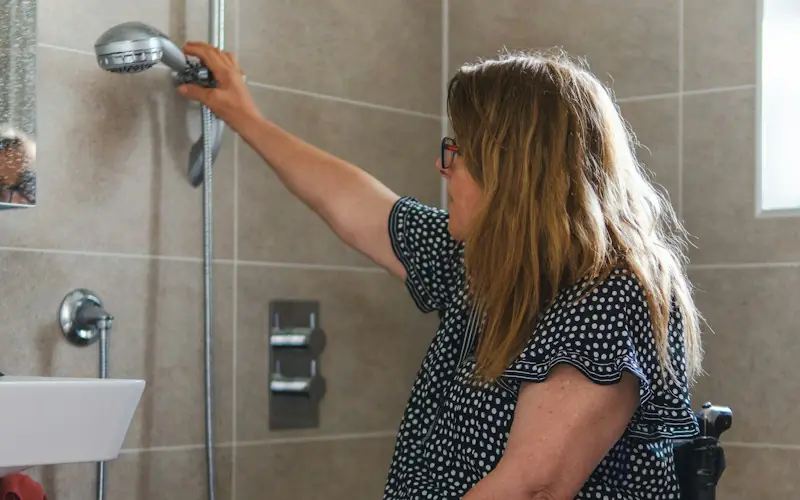
Many people book a home assessment when something has changed and they are unsure what to do, or when they want professional advice before spending money on alterations.
Families often arrange one for a parent who has started to struggle, or before a relative comes home from hospital. Others need evidence for a grant, a housing provider or a legal claim. Where falls are the main worry, our falls prevention service for older adults may be the better starting point.
The visit involves watching real tasks rather than relying on description alone. The therapist takes measurements, notes risks and talks through daily routines with the person and anyone who supports them.
Steps, thresholds, door widths, paths and parking are checked, along with whether a rail, a ramp or a change to the entrance would allow safe access.
The assessment looks at how stairs are managed now and what may be needed later, such as a second banister, a stairlift or, in some homes, a through-floor lift.
Transfers on and off the toilet, in and out of the bath, and around the kitchen and bed are observed. This is usually where questions about level-access showers, toilet heights and bed positions get answered.
Recommendations are prioritised so the most important changes come first. Getting the specification right at the outset reduces the risk of paying for alterations that do not quite work.
Replacing a bath with a level-access shower or wet room, with seat and rail positions specified.
Whether a stairlift suits the staircase and the person, or whether rails and a second banister are enough.
Gradients, landings and handrails for ramps, plus threshold changes for wheelchair users.
Grab rails, lever taps, door entry systems and better lighting.
Input on extensions, through-floor lifts and room conversions, alongside architects and builders.
Visiting or reviewing plans of a potential home to judge whether it suits current and future needs.
The steps match the wider process described on how it works.
Send a few details about the person, the property and the main concerns, including any discharge date or grant deadline.
You receive a quote for the visit and report, and a date is arranged once you are happy to go ahead.
The therapist observes everyday tasks, measures key areas and discusses priorities with the person and family.
A written report sets out prioritised recommendations, with optional follow-up to review plans or finished works.
A Private Occupational Therapy home assessment report is written to be used. It explains the person's needs, the difficulties observed and the specific adaptations or equipment recommended, with measurements where relevant. Builders and architects can work from it, and families can use it to compare quotes.
Some councils will consider a private occupational therapy report as part of a Disabled Facilities Grant application, while others require their own assessment. Councils' processes vary, so it is worth checking with your local authority first; the report can then be written with that process in mind.
Solicitors, case managers and housing providers sometimes need evidence about accommodation needs. For full care and accommodation reports within a claim, see medico-legal and care needs reports.
Home assessments take place in person across Newcastle, Gateshead, North Tyneside, South Tyneside, Sunderland, Northumberland and County Durham. Plans or photos of a property further afield can sometimes be reviewed by arrangement, and video works well for follow-up conversations. The areas we cover page lists locations in more detail.
Fees depend on the size of the property, the complexity of needs and the type of report required. Home assessments are commonly paid for by self-funders, case managers and some insurers. The fees and funding page explains the main routes.
Many visits take between one and two hours, depending on the size of the home and how complex the needs are. The written report follows afterwards.
Yes. A visit before or soon after discharge can identify the equipment and changes needed for a safe return home. Mention the expected discharge date when you get in touch.
Yes. Smaller items such as bath boards, toilet frames and perching stools are often included. For hoists or specialist seating, an equipment and seating assessment may be suggested.
Yes, provided the person is happy for the visit to go ahead, or a lawful decision-maker agrees where they lack capacity. It helps if a relative can be there.
Yes. The assessment considers how a child's needs may change as they grow, so adaptations stay useful for longer. Ongoing support is available through paediatric occupational therapy.
Tell us about the home and the main concerns, including any discharge date or grant deadline, and Private Occupational Therapy will send a quote by email.