Seating and posture
Assessment for armchairs, wheelchairs, cushions and supportive seating, looking at comfort, pressure care, posture and the ability to eat, talk or use the hands.

Independent occupational therapy advice on equipment that suits the person, their carers and their home, covering seating and posture, hoists and slings, moving and handling plans and hands-on training for the people giving care.
Request a quote
Tell us a little about what you need and we will be in touch to discuss the next steps.
Private Occupational Therapy assesses people for seating, posture, hoists, slings and daily living equipment, and writes moving and handling plans for families and care teams. The business does not sell equipment, so advice is based on the person rather than a product range.
An occupational therapist begins with an initial conversation, then assesses the person where the equipment will be used: at home, in a care setting or at school. A written report follows with specifications and reasons, and follow-up can include equipment trials, carer training and a review.
A seating and posture assessment is worth considering when someone spends long periods in a chair or wheelchair and is uncomfortable, slipping or developing marks on the skin.
Wider equipment assessments suit families and care teams who are unsure how to move someone safely, case managers sourcing equipment for a client, and parents whose child has outgrown their seating. Care agencies often need a written plan before a new package can start.
Most assessments focus on one or two of these areas, depending on the main concern.
Assessment for armchairs, wheelchairs, cushions and supportive seating, looking at comfort, pressure care, posture and the ability to eat, talk or use the hands.
Choice of hoist, sling type and size, and transfer methods for bed, chair, toilet and car, so the person and carers stay safe.
Bath lifts, shower chairs, commodes, toilet frames, profiling beds and bed levers matched to the room and the routine.
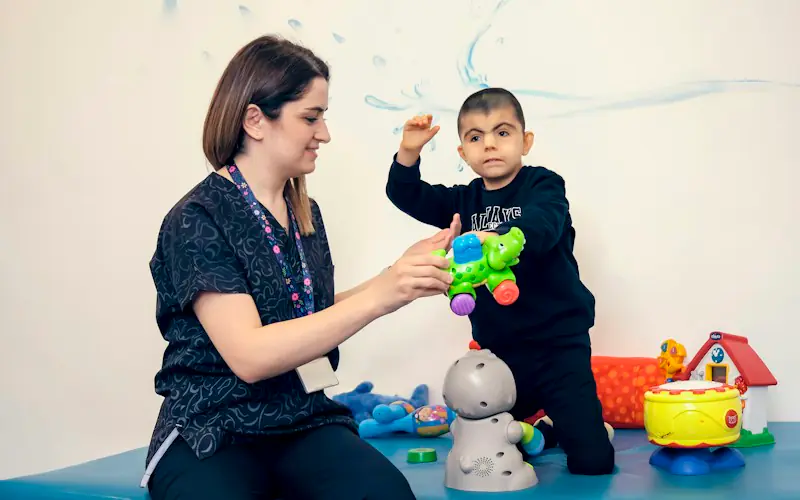
Specialist seating, bathing and positioning equipment for children, with growth and school use in mind.
Paediatric occupational therapyWhen someone needs help to move, everyone involved should follow the same safe method. A moving and handling plan sets out how each transfer is done, which equipment and sling are used, how many carers are needed and what to do if the person is unwell or more tired than usual.
Plans are written in plain English so relatives, personal assistants and agency staff can all follow them. They are reviewed when needs change, for example after a fall, a hospital admission or a change in weight.
Training happens in the home with the actual equipment. Carers practise each transfer while the therapist watches and adjusts technique, which builds confidence and lowers the risk of strain for everyone.
The aim is equipment that gets used every day because it works. Typical goals agreed at assessment include:
Equipment needs often link to the building itself. If a doorway, staircase or bathroom is the real barrier, a home assessment and adaptations visit can be combined with the equipment review.
Professional referrals and self-referrals follow the same route.
Send a few details about the person, current equipment and the main problem, plus any deadline such as a care start date.
Posture, skin, movement and transfers are assessed in the setting where the equipment will be used.
Options are trialled where possible, then set out in a written report with specifications and reasons.
Carers are trained on the agreed equipment, and a review checks that everything works as intended.
Assessments take place wherever the equipment will be used: family homes, supported living, care homes, schools and workplaces across Newcastle, Gateshead, North and South Tyneside, Sunderland, Northumberland and County Durham. Seeing transfers and measuring in the real space matters, so this work is done in person. The areas we cover page has more detail.
Each assessment produces a report with recommendations, specifications and the reasoning behind them. Families use it to buy with confidence, case managers and deputies use it to support funding decisions, and care agencies add the moving and handling plan to their care records. Referrers can find more on our page for professionals.
Assessments may be self-funded or paid for through a personal injury claim, a case manager's budget, an insurer or a direct payment where the funder agrees. The fees and funding page explains the options.
Yes. Existing chairs, slings and bathing equipment are checked for fit and safety, and the report says whether each item can be adjusted, kept or should be replaced.
Yes. The plan covers each transfer, the equipment and sling to use and the number of carers needed, and training can be provided for staff.
Where suppliers offer demonstrations or trial loans, these can be arranged during the assessment so you see how an item works before committing.
Yes. Seating and handling needs often change with MS, Parkinson's or brain injury, and this work can sit alongside neurological rehabilitation.
Send a few details about the person, the equipment they use now and what is not working, and Private Occupational Therapy will reply with a quote by email.