
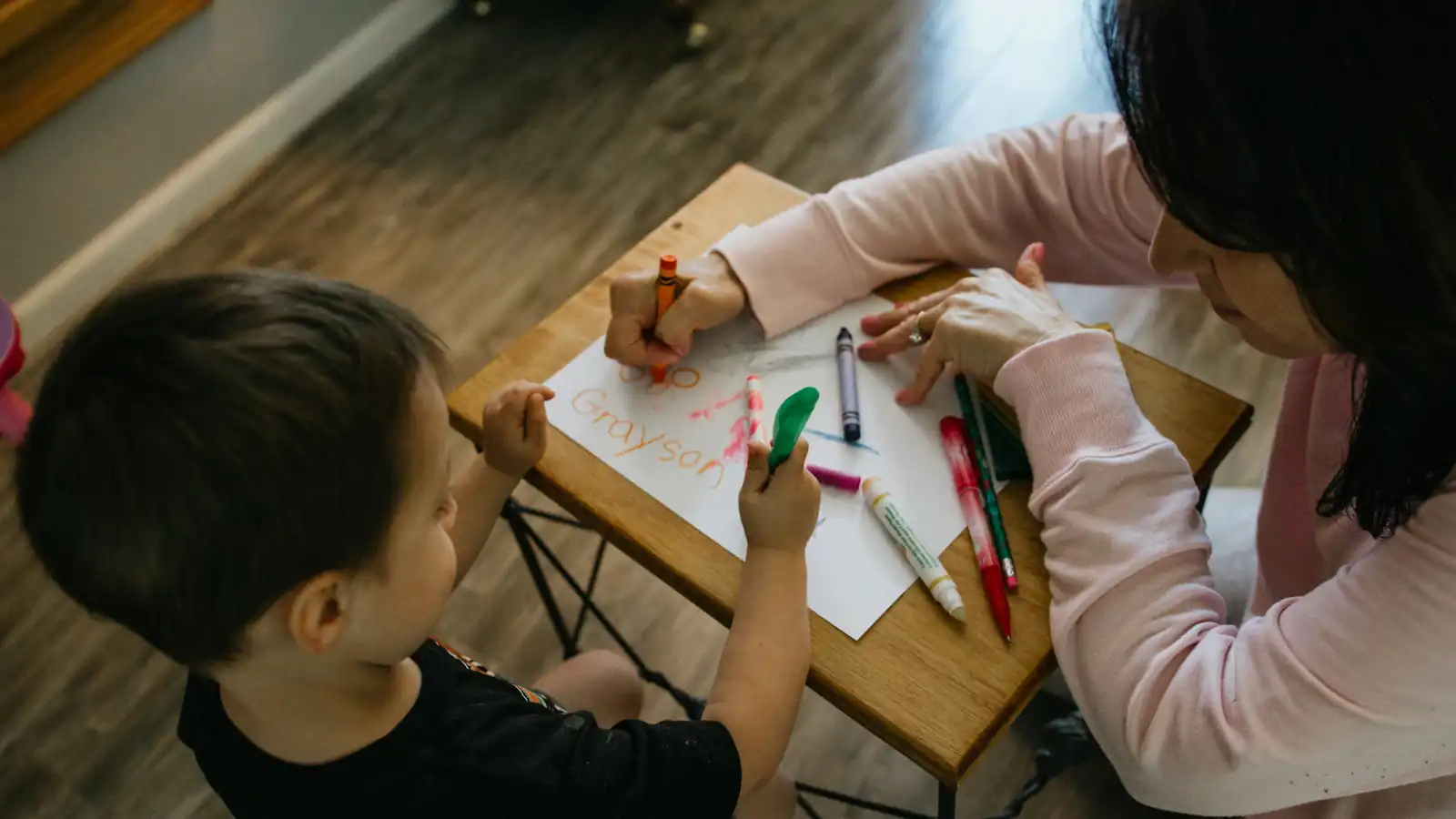
Every child develops at their own pace, and the occasional struggle is completely normal. But if certain everyday tasks are consistently hard, cause distress, or are holding your child back at school, an occupational therapy assessment can help you understand why and what to do about it.
Common signs to look out for
- Handwriting is slow, messy or painful, or your child avoids writing and drawing.
- They seem clumsy: frequently tripping, bumping into things or dropping objects.
- Dressing is a daily battle: buttons, zips, shoelaces or knowing which way clothes go on.
- Mealtimes are difficult: trouble using cutlery, or a very restricted diet linked to textures.
- They are very sensitive to noise, clothing labels, hair brushing or messy play.
- They constantly seek movement: crashing, spinning, chewing or finding it very hard to sit still.
- Meltdowns are frequent, especially after school or in busy places.
- They find PE and playground games hard, such as catching, kicking, hopping or riding a bike.
- Organisation is a struggle: losing belongings, difficulty following instructions or copying from the board.
- Sleep is disrupted and they find it hard to settle and calm their body.
You do not need a diagnosis to request an assessment. If you recognise several of these signs, it is worth talking to an occupational therapist.
What happens next?
A paediatric OT assessment looks at your child's motor skills, sensory processing, visual perception and self-care, using play-based activities and standardised tests. We gather information from you and, where helpful, from school.
You will receive a clear explanation of what is going on and practical recommendations. If therapy is needed, we agree goals together. These are things that matter to your child and family, such as writing their name, getting dressed independently or coping better at school.
How occupational therapy helps
Therapy for children is play-based and fun, but every activity has a purpose. Alongside sessions, we give parents and teachers simple strategies to use every day, so progress carries over into real life. Read more about our paediatric occupational therapy and sensory integration services.