
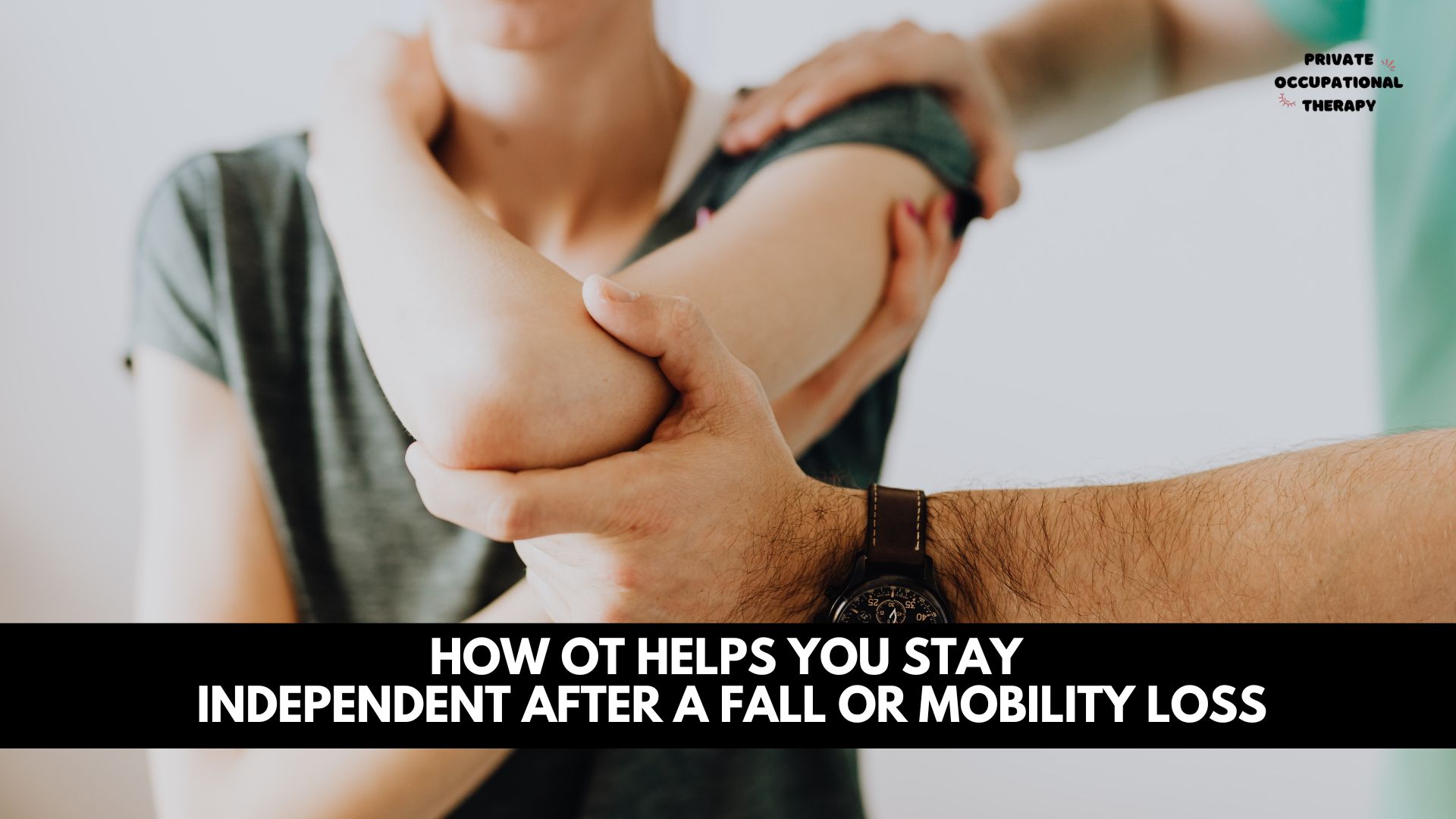
A fall or sudden mobility loss can change everyday life in an instant. Tasks that once seemed simple, like getting dressed or moving around the house, can quickly become difficult. Regaining independence after such an event often requires both physical recovery and emotional adjustment. Occupational therapy (OT) plays a key role in helping people rebuild confidence and return to daily routines safely. With the right support, staying independent at home is entirely possible.
Why Does Losing Mobility Affect Independence So Deeply?
Losing mobility affects independence because it limits how easily a person can perform daily activities. Even small obstacles, like steps or slippery floors, can reduce confidence and increase fear of falling again. This loss of freedom often leads to frustration or withdrawal from normal life. Occupational therapists understand these emotional and physical challenges and work to restore both ability and confidence. Their goal is not just recovery but helping people feel in control again.
How Does Occupational Therapy Support Recovery After a Fall?
Occupational therapy supports recovery by focusing on practical solutions that improve safety and function. After assessing your abilities, an occupational therapist creates a plan tailored to your lifestyle and home environment. They may recommend exercises to strengthen balance, new techniques for moving safely, or adaptive equipment to make daily life easier. Therapy sessions are designed to build progress step by step. This structured support helps you regain stability and independence over time.
What Kind of Home Adaptations Can Improve Mobility?
Home adaptations are a key part of maintaining independence after a fall. Therapists often suggest simple changes such as grab rails, non-slip mats, or raised seating to make movement safer. For more significant mobility issues, they might recommend stairlifts, ramps, or bathroom modifications. These adjustments reduce the risk of future accidents while making the home easier to navigate. By adapting the environment to your needs, occupational therapy helps you live comfortably and safely.
Can Occupational Therapy Help with Confidence and Fear of Falling?
Yes, occupational therapy helps rebuild confidence by addressing both physical ability and emotional well-being. Many people become anxious about moving freely after a fall, which can slow down recovery. Therapists use graded activities and reassurance to help you regain trust in your balance and strength. They also teach coping techniques to reduce fear and encourage gradual progress. Regaining confidence is just as important as physical recovery in staying independent.
How Does OT Promote Long-Term Independence and Safety?
Occupational therapy promotes long-term independence through ongoing support and practical education. You’ll learn strategies to manage energy, prevent fatigue, and handle daily tasks more efficiently. Regular reviews ensure that equipment or adaptations continue to meet your needs as your mobility improves. Therapists also teach problem-solving skills that empower you to adapt to future challenges. With guidance and steady effort, independence becomes sustainable, not temporary.
Why Choose Private Occupational Therapy for Post-Fall Rehabilitation?
Choosing Private Occupational Therapy means working with professionals who specialise in restoring independence after injury or illness. Our therapists carry out detailed assessments and provide clear, personalised recovery plans. We combine in-person sessions, home visits, and teletherapy options to fit your schedule and comfort level. Each session focuses on practical progress and confidence-building in familiar surroundings. With our expertise, you can safely regain control of your daily life.
Regaining Confidence and Freedom Through Occupational Therapy
Occupational therapy helps people move beyond the limitations of a fall or mobility loss. By improving balance, adapting the home, and supporting emotional well-being, OT empowers individuals to live safely and independently. The combination of expert guidance and simple environmental changes creates lasting results. With consistent effort and professional support, recovery becomes a journey toward renewed confidence and self-reliance. Independence is not lost, it’s rebuilt, one step at a time.


